
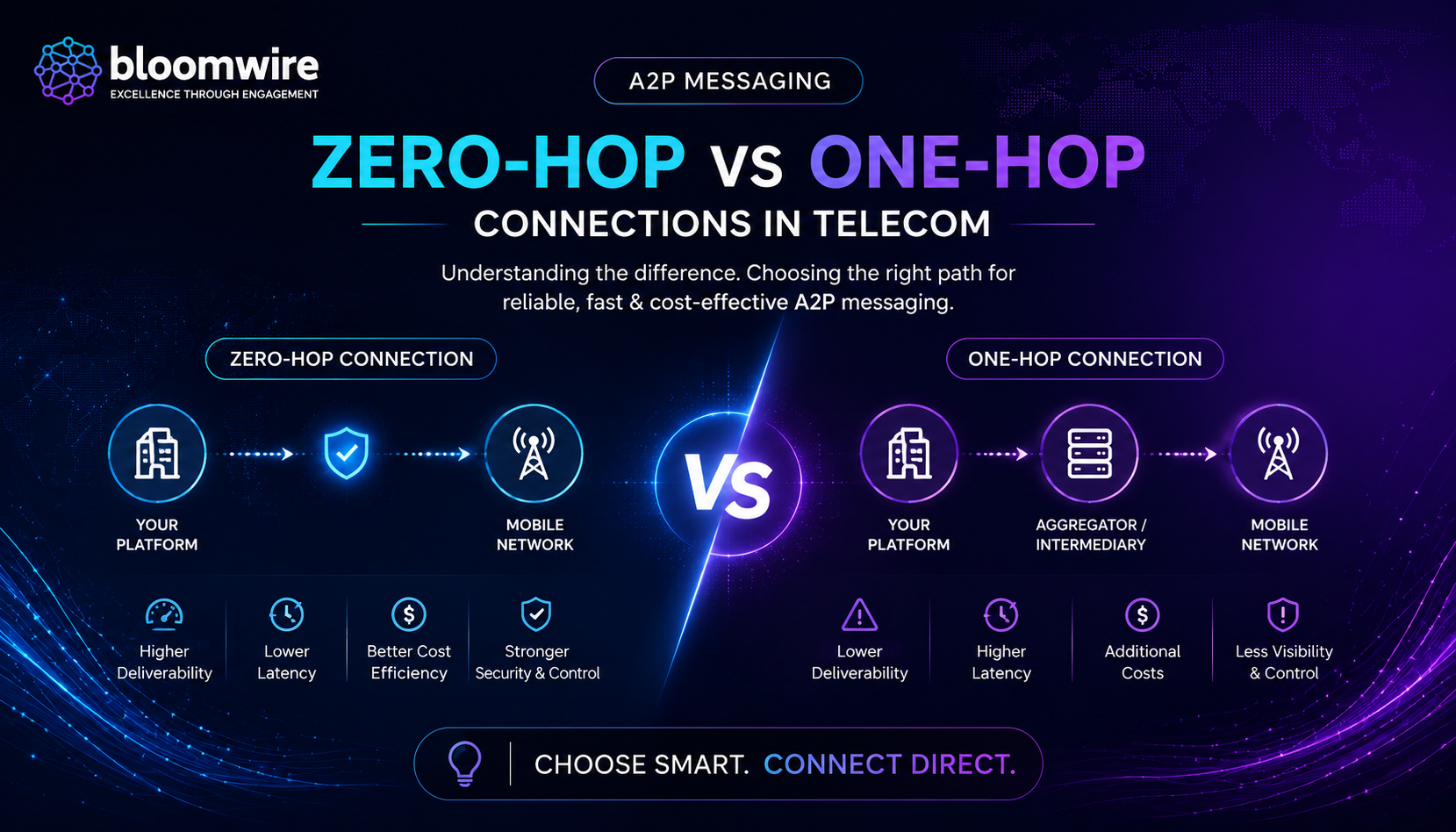
Short answer: a zero hop (direct) route means your SMS provider is connected straight to the mobile operator, so messages go from the provider to the operator with nothing in between. A one hop route passes through one intermediary, such as an aggregator, before reaching the operator. Zero hop is usually faster, more reliable and more transparent, which matters most for OTPs and alerts. One hop can be simpler and cheaper for international reach, but adds a point where delays, lost delivery reports or altered sender IDs can happen.
What is A2P messaging?
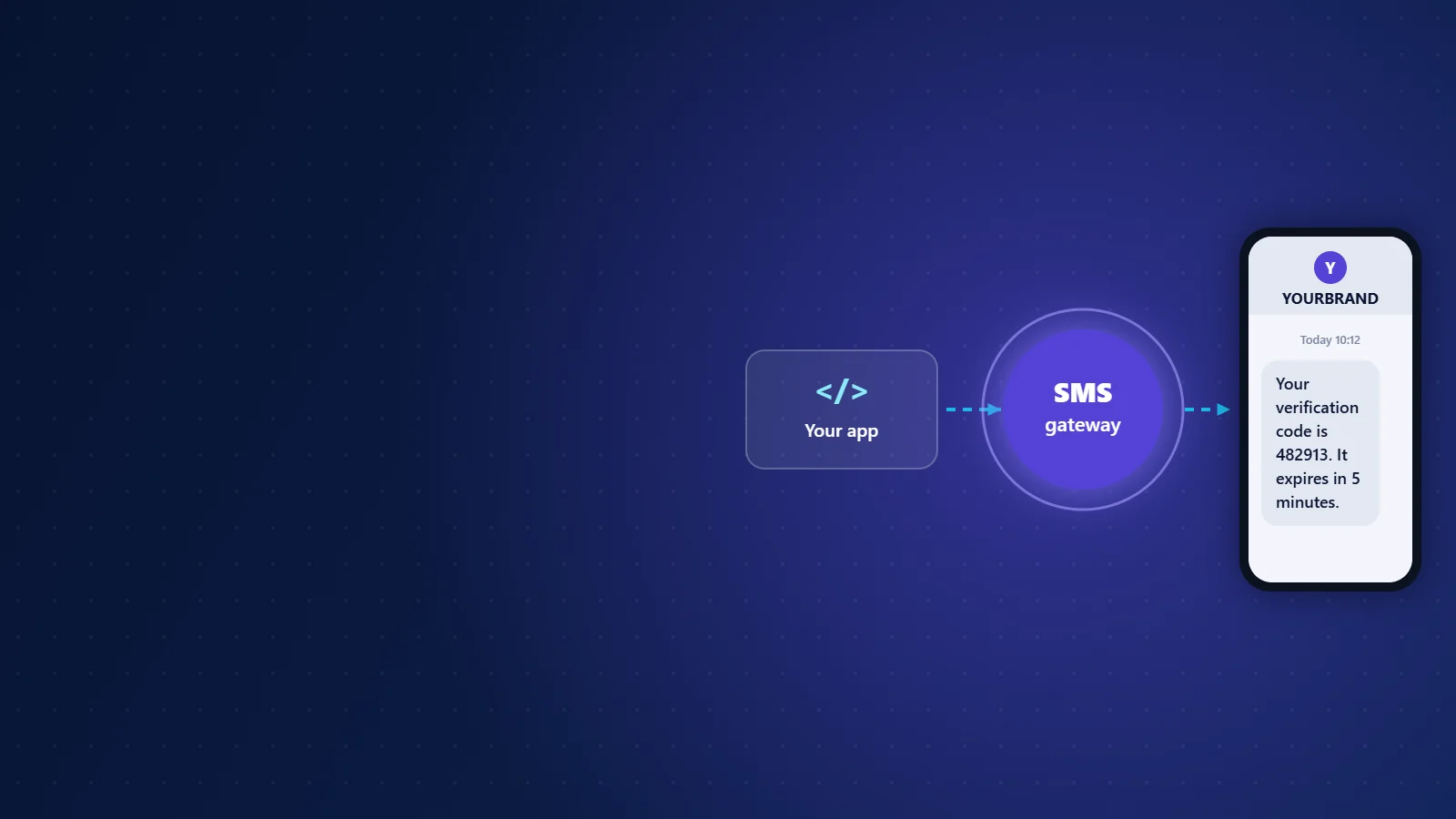
A2P (application-to-person) messaging is SMS sent by a system to a person: one-time passwords, order updates, payment alerts, reminders and promotions. Unlike person-to-person texting, A2P traffic travels through an SMS provider's gateway to the mobile operators. How many companies sit between the provider and the operator is what "hops" describe. For how the pieces fit together, see SMSC, SMS gateway and SMS API explained.
Zero hop: a direct connection to the operator
With a zero hop route, the provider has its own connection to each mobile network operator (MNO).
- Speed: no intermediary, so less delay. This is critical for OTPs that expire in minutes.
- Reliability: fewer points of failure, so fewer lost or late messages.
- Transparency: delivery reports come from the operator, so the status you see is accurate.
- Control: the provider manages sender ID registration and routing directly with the operator.
- Trade-off: direct connections take investment and operator agreements, so they are usually local to one country.
One hop: one intermediary in between
With a one hop route, the provider sends traffic to another company, often an aggregator, which has the operator connection.
- Convenience: one connection can reach many countries through the intermediary's network.
- Cost and setup: no operator agreements to maintain, which can lower costs for low or international volumes.
- Trade-offs: extra delay, an extra point of failure, and less visibility into what happens to each message.
Watch out for grey routes
Some very cheap SMS offers use unofficial routes, such as SIM boxes or chains of several intermediaries. These can replace your sender ID with a random number, drop delivery reports, fail without warning or be blocked by the operator. If a price looks far below the market, ask how the traffic reaches the network.
Zero hop vs one hop at a glance
| Zero hop (direct) | One hop | |
|---|---|---|
| Delivery speed | Fastest | Slightly slower |
| Reliability | Highest, fewest failure points | Depends on the intermediary |
| Delivery reports | From the operator | Passed on by the intermediary |
| Sender ID control | Managed directly with the operator | Depends on the intermediary |
| Best for | OTPs, alerts, local business messaging | International reach, low volumes |
How to check a provider's routes in Sri Lanka
- Ask which Sri Lankan networks they connect to directly.
- Send test messages, including an OTP, to numbers on each network and time how long they take to arrive.
- Check that delivery reports show a clear status for every message.
- Confirm your sender ID appears correctly on every network.
- Ask how they handle sender ID registration. See our 2026 sender ID guide.
For a wider comparison of providers, read the best SMS gateways in Sri Lanka compared. For login codes, see OTP over SMS or WhatsApp.
Bloomwire's SMS gateway and API sends over direct operator routes in Sri Lanka, with branded sender IDs and delivery reports.
Frequently asked questions
What does zero hop mean in SMS?
Zero hop means the SMS provider is connected directly to the mobile operator, so messages go from the provider to the operator with no intermediary.
Is zero hop always better than one hop?
For speed, reliability and accurate delivery reports, usually yes, especially for OTPs and alerts. One hop can make sense for international reach or very low volumes.
Why do cheap SMS routes fail?
Very cheap routes often use unofficial paths such as SIM boxes or several intermediaries. These can change your sender ID, lose delivery reports or be blocked by operators.
How can I tell if my SMS provider uses direct routes?
Ask which networks they connect to directly, then test delivery speed and sender ID display on each network and check that every message has a delivery report.