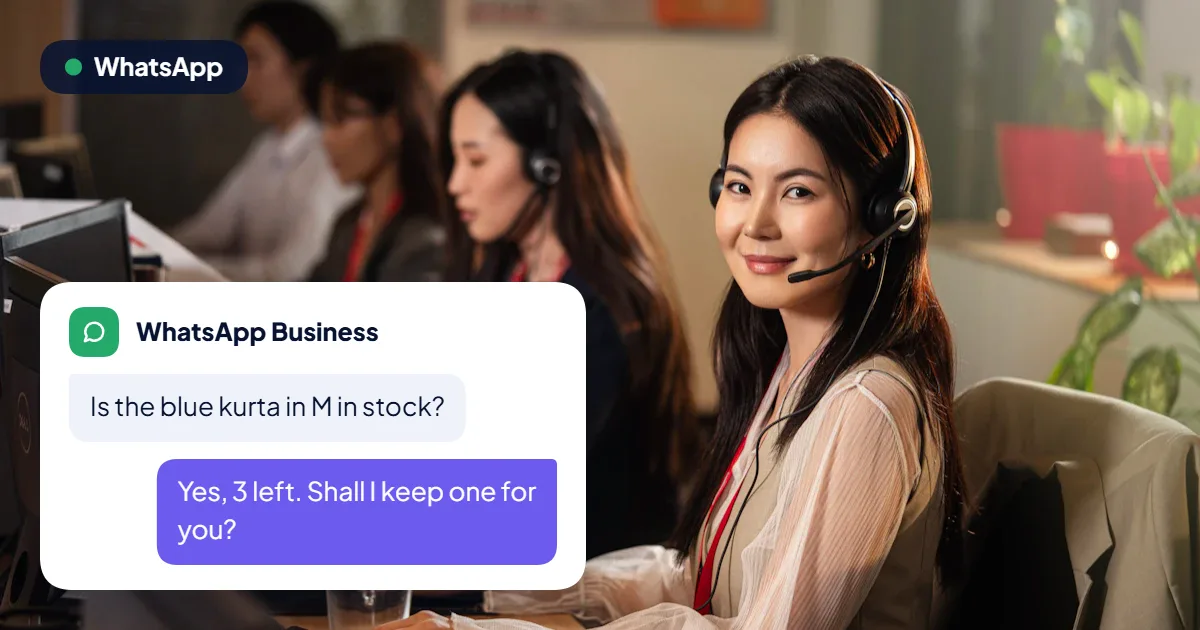

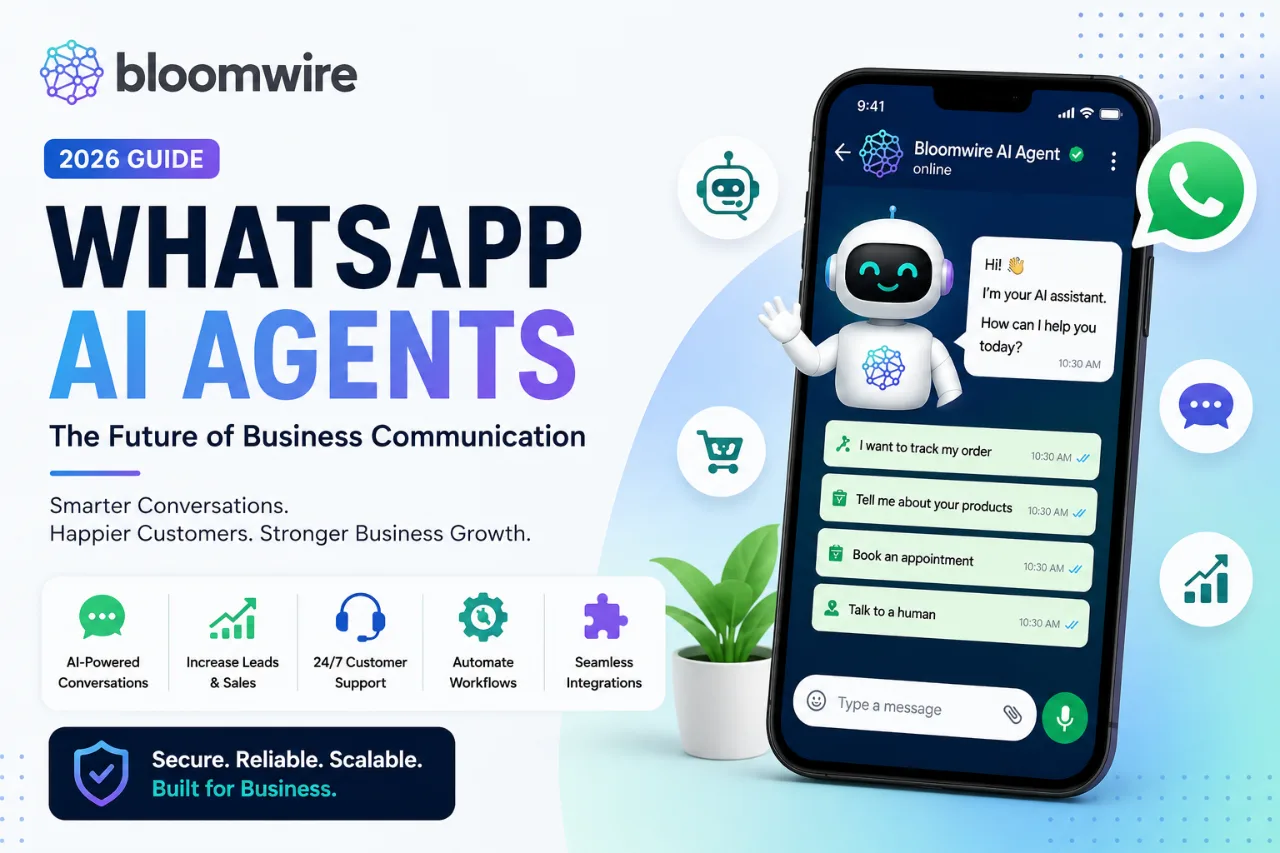
A WhatsApp AI agent is software that understands a customer's message, decides what to do and completes the task, such as checking an order, booking an appointment or qualifying a lead, and hands over to a person when it should. It is not a menu-driven chatbot. In 2026 it is the most practical way for a Sri Lankan business to answer customers quickly on the channel they already use every day.
Key takeaways
- AI agents understand free-form messages; traditional chatbots follow fixed menus and keywords.
- The best first use cases are order status, FAQs, bookings, lead qualification and payment reminders.
- Always design a clear handover to a human agent, with the full conversation history.
- Start with one narrow workflow, measure it, then expand.
- WhatsApp Business API access is required for business-scale automation.
What is a WhatsApp AI agent?
A WhatsApp AI agent is an AI-powered assistant that talks to customers on WhatsApp through the official WhatsApp Business API. It reads what the customer actually wrote, works out the intent, pulls the right information from your systems and replies in natural language.
A good agent can do three things a basic bot cannot:
- Understand context. It follows the whole conversation, not just the last keyword.
- Take action. It can look up an order, create a booking, update a CRM record or send a payment link.
- Know its limits. It escalates to your team when a request is sensitive, unclear or high value.
How is an AI agent different from a traditional chatbot?
A traditional chatbot follows a script. An AI agent works toward a goal. The table shows the practical differences.
| Area | Traditional chatbot | WhatsApp AI agent |
|---|---|---|
| Understanding | Keywords and button menus | Free-form language, including typos and mixed languages |
| Conversation | Fixed flow, easy to break | Remembers context and adapts |
| Actions | Shows pre-written replies | Connects to your systems and completes tasks |
| Handover | Often dead-ends | Escalates with history and a summary |
| Maintenance | Every new question needs a new rule | Learns from your knowledge base and improves with review |
Why are businesses moving customer conversations to WhatsApp?
Customers already use WhatsApp daily, so there is nothing to download and no form to fill in. Messages are read quickly, conversations stay in one thread, and customers can reply when it suits them instead of waiting in a call queue. For businesses, that means faster responses, fewer missed enquiries and a clear record of every interaction.
What are the best use cases for WhatsApp AI agents?
Customer support
Answer common questions about delivery, returns, opening hours and pricing at any hour, and pass complex cases to your team.
Order and delivery updates
Let customers ask "Where is my order?" and get a live answer from your order system.
Lead qualification
Ask a few smart questions, such as budget, timeline and requirement, and send only qualified leads to sales.
Appointments and reservations
Book, reschedule and remind. This suits clinics, salons, service centres and showrooms.
Payments and reminders
Send payment links, due-date reminders and confirmations in the same conversation.
What are the benefits and limitations?
Benefits: instant replies, lower cost per conversation, consistent answers, support outside office hours and more time for your team to handle complex work.
Limitations: an agent is only as good as the information you give it. It needs an accurate knowledge base, clear rules for what it may and may not do, and regular review of real conversations. Sensitive topics, complaints and large transactions should always reach a person.
What mistakes should businesses avoid?
- Trying to automate everything at once. Start with one workflow and expand.
- No human handover. Customers get frustrated when there is no way to reach a person.
- Poor knowledge content. Outdated or vague answers produce outdated or vague replies.
- Ignoring language. In Sri Lanka, customers write in Sinhala, Tamil, English and mixtures. Read more in our guide to multilingual AI chatbots and Sinhala support.
- Not measuring results. Track resolution rate, response time, handover rate and customer satisfaction.
How do you get started with a WhatsApp AI agent?
- Pick one use case with high volume and clear answers, such as order status or FAQs.
- Get WhatsApp Business API access and verify your business profile. Our WhatsApp Business knowledge base explains the setup.
- Prepare your knowledge: FAQs, policies, price lists and sample conversations.
- Connect your systems such as CRM, order management or booking tools.
- Set handover rules so people take over when needed.
- Launch to a small group, review conversations weekly and improve.
Frequently asked questions
Is a WhatsApp AI agent the same as a chatbot?
No. A chatbot follows fixed rules and menus. An AI agent understands free-form messages, uses your data and completes tasks, handing over to a person when needed.
Do I need the WhatsApp Business API?
Yes, for automation at business scale. The WhatsApp Business app is designed for small, manual use, while the API supports automation, multiple agents and integrations.
Can an AI agent reply in Sinhala and Tamil?
Modern AI agents can handle Sinhala, Tamil, English and mixed-language messages, provided the agent is configured and tested for them.
Will AI agents replace my support team?
No. They handle repetitive questions so your team can focus on complex, sensitive and high-value conversations.
How long does it take to launch?
A focused first workflow can often be live within weeks, depending on WhatsApp Business API approval and how many systems need to connect.
Next steps
Bloomwire helps Sri Lankan businesses launch WhatsApp automation with local support. Explore our WhatsApp Business API, see AI Studio and AI live chat, or talk to our team about your first workflow.